

- HOME
- Market Insights
- Bloated After Holiday Feasts? Your Guide to Beating Digestive Overload
Bloated After Holiday Feasts? Your Guide to Beating Digestive Overload

After the big holiday meal, your stomach feels so bloated you can barely sit or stand. Next day? Another spread at a family gathering. You're not hungry, but how do you turn down Grandma's pie? By New Year's, you're burping nonstop, your gut feels off, and you haven't had a decent bowel movement in days...
This isn't a weak stomach. Your gut is simply protesting.
Around 15–40% of adults deal with indigestion at some point (some studies say 30–48%). About 75% never see a doctor—most just power through.
From Christmas to New Year's, it's a minefield for digestion. One in three gets acid reflux during the holidays.
Why can your stomach handle everyday meals, then fall apart during the holidays?
References: Medicine and Health Sciences: Holiday Feast and Acid Reflux, NIH: Functional Dyspepsia, Frontiers: Mechanism of Functional Dyspepsia
Quick Navigation
- What's Really Going On When Food Won't Digest?
- Why Holiday Meals Wreck Your Digestion
- Before You Eat: Prep Your Gut
- While You're Eating: Smart Moves
- After You Eat: Feel Better Fast
- Your Digestive Toolkit: Enzymes, Probiotics, and More
- Special Considerations
- Your Post-Holiday Reset Plan
- Boncha Bio: Enzymes and Probiotics That Actually Work
- FAQ
1. What's Really Going On When Food Won't Digest?
The Old-School Take: Traditional medicine calls it "food stagnation"—when food just sits instead of moving along. You know the feeling: bloating, heaviness, zero appetite, and bathroom trouble.
What Modern Medicine Says:
| What It Feels Like | Medical Term | In Plain English |
|---|---|---|
| Food sitting like a brick | Functional Dyspepsia | Your stomach feels awful, but tests come back normal |
| Nothing's moving | Delayed Gastric Emptying | Food hangs around in your stomach way too long |
| Everything feels sluggish | Reduced gut motility | Your digestive tract slows down, leading to bloating and constipation |
(Swipe left/right to view full table on mobile)
Bottom line: It's not a disease—just your digestive system hitting a temporary wall.
References: Cleveland Clinic, Mayo Clinic: Functional Dyspepsia
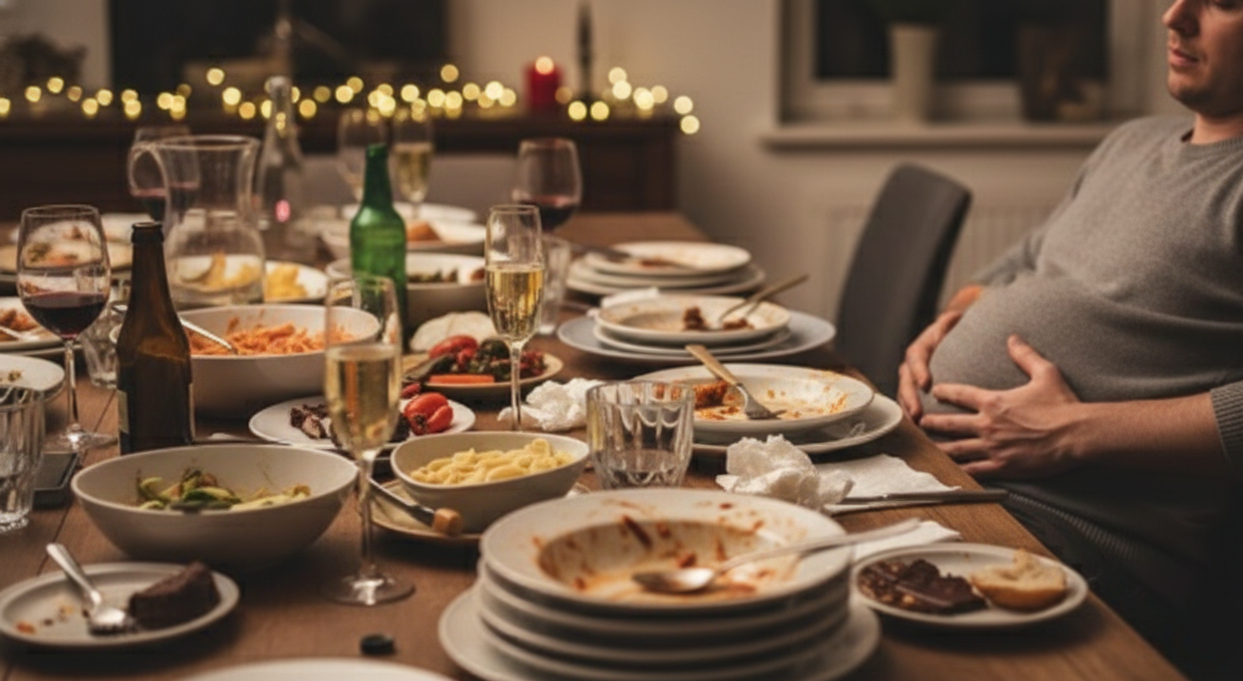
2. Why Holiday Meals Wreck Your Digestion
Your gut isn't just dealing with extra food—it's getting hit with multiple problems at once.
Why Holiday Food Is Hard to Digest
| Food Type | Think... | Why It's Rough on Your Gut |
|---|---|---|
| High-fat | Gravy, butter, creamy casseroles | Needs tons of bile and enzymes; slows stomach emptying and ups your reflux risk |
| High-protein | Turkey, ham, prime rib | Demands more stomach acid; takes the longest to break down |
| Heavy starches | Stuffing, mashed potatoes, dinner rolls | Dense starch structure that enzymes struggle with |
| High-sodium | Glazed ham, gravy, cheese boards | Causes water retention, making bloating worse (~27% higher risk) |
(Swipe left/right to view full table on mobile)
Four Reasons You Feel So Awful
1. Your Stomach Stretches and Pressure Builds
When you load up, pressure inside your stomach rises. Research shows that an overstretched stomach can't close its top valve properly, letting acid creep back up—hello, heartburn. Fatty foods slow emptying too, which is why you feel stuffed for hours.
2. You Eat Faster Than Your Brain Can Process
It takes about 20 minutes for your brain to register fullness. Science confirms this. Eat too fast, and you've overdone it before your brain catches on.
Try this: chew each bite 40 times instead of 15. You could eat 12% less while feeling just as satisfied—more chewing lowers hunger hormones and boosts fullness signals.
3. Alcohol and Bubbly Drinks Are a Double Whammy
Alcohol loosens the valve keeping acid in place. Carbonated drinks? Those bubbles expand in your stomach, causing bloating and burping.
Worse, both ramp up acid production, and alcohol slows your gut—so food marinates in acid longer.
4. Stress Gets Your Gut Involved
Holidays bring family drama, travel stress, and social pressure. Stress talks to your gut via the "gut-brain axis", making symptoms feel more intense.
About a third of people with digestive issues also have anxiety. When stressed, your gut becomes hypersensitive—normal acid suddenly feels painful. That's why you might crush a big meal normally, but struggle at a tense Thanksgiving with the in-laws.
What Happens When You Feast Day After Day
| Day | What's Happening Inside |
|---|---|
| 1–2 | Your gut's hanging in there; some fullness |
| 3–5 | Enzymes running low; gut bacteria starting to shift |
| 6+ | Real symptoms show up: constipation, bloating, no appetite |
(Swipe left/right to view full table on mobile)
Research shows major diet changes shift gut bacteria in just 48 hours. That's why you crash around day three—it's everything adding up.
3. Before You Eat: Prep Your Gut
Think of it like warming up before a workout—a little prep goes a long way.
30–60 Minutes Before
| What to Do | Why It Works |
|---|---|
| Sip warm water or tea | Helps curb hunger so you don't attack the buffet |
| Take a 10–15 minute walk | Fires up your metabolism and gets digestion ready |
| Grab a small snack | Don't arrive starving—a handful of nuts or some fruit does the trick |
(Swipe left/right to view full table on mobile)
Consider Digestive Enzymes
Planning to overdo it? Multi-enzyme supplements with amylase, protease, and lipase 15–30 minutes before eating can cut post-meal misery.
4. While You're Eating: Smart Moves
1). The Order You Eat Matters
What goes in first affects blood sugar and fullness:
Veggies → Protein → Fats → Carbs
Leading with vegetables and protein helps you feel satisfied sooner. Experts explain this order gets stomach acids flowing properly, fiber fills you up, and saving carbs for last prevents acid overload while keeping blood sugar steadier.
2). Knowing When to Stop
A good rule: "I could keep eating, but I won't be hungry if I stop." That's about 70% full.
What helps:
- Slow down and chew well: Less air swallowed = less bloating. Proper chewing kicks enzymes into gear
- Don't pile your plate: Overeating pressures your stomach and slows digestion
- Put the phone away: Distracted eating = mindless overeating
3). What to Drink
| ✅ Good Picks | ⚠️ Easy Does It | ❌ Hard Pass |
|---|---|---|
| Warm tea (herbal or light) | Alcohol | Ice-cold drinks |
| Room-temp water, small sips | Soda or sugary drinks |
(Swipe left/right to view full table on mobile)
4). What to Limit
Go easy on greasy, fried, and spicy foods, plus booze, coffee, and soda. These irritate your stomach lining and boost acid production, setting you up for heartburn.
5. After You Eat: Feel Better Fast
The First 30 Minutes
Do:
- Take a 10–15 minute walk—gets things moving
- Stay upright; resist crashing on the couch
Don't:
- Lie down right away (slows digestion, invites reflux)
- Hit the gym hard (blood rushes to muscles, away from digestion)
- Jump in a hot shower (can make you lightheaded)
Studies confirm post-meal walking helps blood sugar and reduces that stuffed feeling. Wait 2-3 hours before lying down.
1–2 Hours Later
Warm Drinks That Actually Help:
| Drink | What It Does |
|---|---|
| Ginger tea | Speeds up stomach emptying; eases bloating and nausea |
| Hawthorn tea | Stimulates digestive juices—especially good after heavy meat dishes |
| Green tea, peppermint tea, lemon tea | Caffeine and tannins get digestive juices flowing |
(Swipe left/right to view full table on mobile)
Try a Belly Massage: Gentle clockwise circles around your belly button for 5–10 minutes follows your colon's natural direction.
More Quick Fixes
- Chew sugar-free gum: 10–30 minutes eases heartburn—more saliva neutralizes acid
- Lie on your left side: Stomach empties to the right, so lying left reduces reflux
- Warm compress: ~40°C (104°F) on your belly for 15 minutes relaxes gut muscles
Note: Peppermint helps some digestive issues but worsens acid reflux by relaxing the valve. Skip it if that's you.
6. Your Digestive Toolkit: Enzymes, Probiotics, and More
No magic fix for holiday overindulgence—you need a toolkit.
The Basics
| Tool | What It Does | When to Use |
|---|---|---|
| Digestive enzymes | Help break down food | Before or during big meals |
| Probiotics | Keep gut bacteria balanced | Daily; especially after the holidays |
| Natural remedies | Gentle support | After meals |
(Swipe left/right to view full table on mobile)
1). Digestive Enzymes
When you eat way more than usual, your body's enzymes can't keep pace. Taking extra is like bringing in reinforcements.
For chronic indigestion, multi-enzyme supplements ease discomfort and improve quality of life. Some enzyme blends genuinely reduce post-meal bloating.
That said, healthy people typically produce enough naturally. And those weight-loss claims? Zero evidence.
2). Probiotics
Holiday overeating and wrecked sleep can throw gut bacteria out of whack, causing bloating or bathroom problems.
Some research shows certain strains improve gut movement, nutrient absorption, and immunity. Probiotic yogurt may help with constipation and bloating too.
But evidence is mixed. Results vary by strain, and the 2020 American Gastroenterological Association only recommends probiotics in specific situations.
Best time: Empty stomach (morning or bedtime), when there's less acid.
3). Natural Digestive Aids
| What | How It Helps | How to Use |
|---|---|---|
| Hawthorn | Stimulates digestive juice production | Steep dried berries in hot water |
| Ginger | Speeds stomach emptying; calms bloating and nausea | Fresh ginger tea |
| Radish | Contains natural digestive enzymes | Add to soups or eat raw |
| Citrus peel | Calms gut spasms | Steep dried peel in hot water |
(Swipe left/right to view full table on mobile)
7. Special Considerations
| If You Have... | Watch Out For | What to Do |
|---|---|---|
| Kidney issues | High potassium and phosphorus put extra strain on kidneys | Limit these minerals; follow your doctor's fluid and salt guidelines |
| Recent GI surgery | Recovery requires easy-to-digest foods | Stick to soft, bland meals per your care team's advice |
| Sensitive stomach | Rich, starchy foods can trigger bloating and reflux | Eat smaller portions more often; choose gentle options |
| Gout or high uric acid | Purine-rich foods spike uric acid | Cut way back on shellfish, organ meats, and beer; hydrate well |
| Diabetes | Uncontrolled eating plus skipped meds = blood sugar chaos | Don't skip your meds; check blood sugar regularly; avoid sugary drinks and desserts |
(Swipe left/right to view full table on mobile)
8. Your Post-Holiday Reset Plan
| When | What to Eat | Goal |
|---|---|---|
| Day 1–2 | Less food, less fat, less salt | Give your gut a well-deserved break |
| Day 3–5 | Gradually return to normal | Add fiber; keep taking probiotics |
| Day 6+ | Build better habits | New year, fresh start—create sustainable routines |
(Swipe left/right to view full table on mobile)
Reset Your Eating
Once January hits, ditch heavy meals. Experts recommend "less processed, less salt, less oil."
High-fiber foods keep things moving and prevent post-holiday constipation.
1). Sample Day 1–2 Menu
- Breakfast: Oatmeal with banana + scrambled eggs
- Lunch: Grilled chicken breast + steamed vegetables + half your usual carbs
- Dinner: Light vegetable soup or a simple salad with lean protein
2). Hydrate
Water flushes out excess sodium and metabolic waste. Aim for 8 glasses daily (~2L).
3). Move Your Body
Light exercise gets your gut moving, easing bloating and releasing feel-good chemicals that combat post-holiday fatigue.
4). Prioritize Sleep
Skimping on sleep raises cortisol, making you hungrier and promoting fat storage. Poor sleep messes with hunger hormones, driving comfort food cravings. Aim for 7-8 hours nightly.
5). Still Constipated?
- Bump up fiber (25g+ daily)
- Drink more water (2L daily)
- Stay active
- Try probiotics
- No improvement after 3 days? See a doctor
.png)
9. Boncha Bio: Enzymes and Probiotics That Actually Work
Holidays should be about family—and feeling your best. Enzymes and probiotics can truly help when formulated right.
Three Ways We Protect What Matters
❶ Preserving Potency from Production to You
Our gentle manufacturing keeps active ingredients intact throughout the process.
How We Do It:
- Low-temperature, low-pressure processing preserves enzyme and probiotic activity
- Ultra-low water activity technology extends shelf-life stability
❷ Shielding Actives Through Stomach Acid
Your stomach's pH is tough terrain. We make sure ingredients arrive where they're needed.
Our Burst Chew/Candy Capsule Technology:
- Protective coating carries contents safely through the stomach
- Inner matrix wraps ingredients in a protective cocoon
❸ Making Supplements You'll Actually Want to Take
Great taste drives daily habits. We make compliance effortless.
How We Do It:
- Advanced flavor-masking for a pleasant experience
- Enjoyable chewing format
- No water needed—take anytime, anywhere
Work With Us
We're an advanced burst chew/candyceutical manufacturer taking products from concept to market. Building a digestive health product? Need activity protection, innovative forms, and smart formulation? Let's connect.
FAQ
Q1. What exactly is "food stagnation" and how is it different from indigestion?
A: Food stagnation describes when food sits in your stomach instead of moving through normally. Modern medicine calls this functional dyspepsia or delayed gastric emptying—your gut feels awful, but tests often come back normal.
Q2. Why does holiday eating cause more digestive problems than regular meals?
A: Holiday meals combine multiple challenges: high-fat foods slow stomach emptying, large portions stretch the stomach (increasing reflux risk), and stress heightens gut sensitivity. According to research, one in three people experiences acid reflux during the holidays.
Q3. How can I prevent bloating before a big holiday meal?
A: Prep your gut 30–60 minutes before eating: sip warm water or tea to curb hunger, take a short walk to activate digestion, and consider digestive enzymes with amylase, protease, and lipase if you plan to overindulge.
Q4. What's the best eating order to reduce post-meal discomfort?
A: Start with vegetables, then protein, fats, and carbs last. This sequence helps you feel full sooner, keeps blood sugar steadier, and reduces acid overload—so you naturally eat less of the heavy stuff.
Q5. Should I take digestive enzymes or probiotics for holiday digestion issues?
A: Both serve different purposes. Digestive enzymes help break down food during or before big meals. Probiotics support gut bacteria balance over time—best taken daily on an empty stomach. For acute holiday overindulgence, enzymes offer more immediate relief.
Q6. What should I do immediately after overeating?
A: Take a 10–15 minute walk—studies confirm this helps blood sugar and reduces that stuffed feeling. Stay upright for 2–3 hours before lying down to prevent reflux. Avoid intense exercise or hot showers right after eating.
Q7. When should I see a doctor for digestive issues during the holidays?
A: Seek medical attention if you experience severe abdominal pain, bloody or black stools, persistent vomiting, fever, or unintended weight loss. If symptoms like bloating and constipation persist beyond 3 days despite home remedies, consult a healthcare provider.
Q8. Why choose Boncha Bio's burst chew for digestive health product development?
A: Boncha Bio specializes in preserving enzyme and probiotic potency through low-temperature processing and protective coating technology. Our burst chew/candy capsule format shields active ingredients while offering a pleasant taste—making daily compliance effortless. Contact us for ODM services from concept to market.
Keep Reading
- Feel Uncomfortable After Eating? How to Relieve GERD Symptoms
- Is Post-Meal Fatigue Related to Enzyme Deficiency?
- How Gut Health Affects Your Whole Body: From the Gut-Brain Connection to Immunity
- What Is Probiotic CFU? How to Pick the Right One
.jpg)
Article Classification
Recent Articles
- Not Overweight but Cholesterol Still High? What's Going On with Your LDL and HDL?
- How Do Nutraceutical Brands Find Their Next Market Opportunity?
- Is Your Next Product Still a Guess? How AI Is Quietly Rewriting the Rules of Health Product Development
- Bloated After Holiday Feasts? Your Guide to Beating Digestive Overload
- Is Your Gut Your Second Brain? How It Affects Your Whole Body